

How a Kid from Douala Turned Street Slang Into a Cultural...
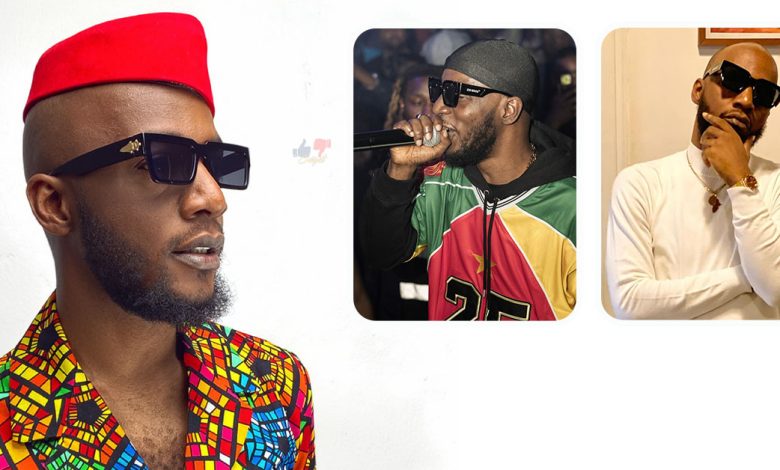
Some artists find their audience. Others build one from scratch, on their own terms, in their own language, with no blueprint to follow. Jovi, born Ndukong Godlove Nfor in Douala on October 24, 1983, belongs to that second, rarer group. And if you’ve spent any time around Cameroonian music in the last decade or so, you already know his name. If you haven’t, consider this your introduction to Le Monstre.
Jovi grew up in Douala, the coastal city that raised him, shaped his accent, and filled his ears with the kinds of sounds that would later find their way into his records. Born to Anglophone parents in the predominantly Francophone city, he moved between worlds early, attending Sacred Heart College in Mankon, one of Anglophone Cameroon’s most respected boarding schools, before moving on to the Cameroon College of Arts, Science and Technology in Bambili. Eventually he landed at the University of Yaoundé II, where he studied economics and business management. That pivot from Douala to Yaoundé matters, because Yaoundé is where everything would eventually take shape: the label, the studio, the movement.
What he did next surprised people. Instead of staying in music’s conventional lane, he traveled all the way to India to study sound engineering at SAE in Bangalore. The practical reason was simple enough: he had wanted to study in the UK but couldn’t afford it. So he went east instead, came back with technical skills most Cameroonian artists didn’t have, and quietly set about making himself impossible to replicate.
That combination of business training, engineering knowledge, and street instincts from Douala is what makes Jovi so hard to copy. He doesn’t just write bars. Under his producer alias Le Monstre, he builds entire sonic worlds from the ground up. Every beat, every layer, every production decision belongs to him. In a country where so many artists outsource their sound, Jovi kept his in-house by design.
His opening move was loud enough to wake the whole country. When “Don 4 Kwat” dropped in 2012, it didn’t creep onto the scene. It barged in. The video traveled across Cameroonian TV channels and online platforms with a speed that felt almost surprising at the time, though in hindsight it made perfect sense. Here was a Cameroonian rapper rapping in Pidgin English, not apologizing for it, not dressing it up, just letting it hit. He became the first rap artist in Cameroon to rap in Pidgin English, Jovi a fact that seems almost hard to believe now, given how natural it sounds coming from him.
https://www.youtube.com/watch?v=44ad7xlThB8
The full debut album, H.I.V, short for Humanity Is Vanishing, confirmed he was not a one-song story. Bakwa magazine described it as the long awaited arrival of a self-assured emcee very conscious of his abilities, the vacuum in the genre, his audience’s expectations, and the right dose of hustle to assert his place. That phrase about the vacuum in the genre said more than a simple compliment would have. It acknowledged what many had quietly felt for years: that Cameroon’s homegrown music scene, however rich in Makossa and Bikutsi, had a gap where contemporary, street-rooted, locally spoken rap should have been. Jovi stepped into that gap and filled it completely.
Three years later came the album that turned him from a breakthrough act into a movement. Mboko God, released in May 2015 and recorded in his Yaoundé studio, was a statement dressed up as a rap album. All songs were composed, produced, recorded, mixed, and mastered at New Bell Music studios in Yaoundé, Newbellmusic with every creative decision belonging entirely to Jovi. It fused Cameroonian rhythms, languages, and harmonies together, pulling from Bikutsi, Makossa, Bend Skin, Njang, and even Soukous, all while sounding unmistakably current. He opened the album with Ngemba and Nliimbom dialects, languages that carried the weight of ancestral Cameroon, then flipped into trap flows without missing a beat. It was a calculated move, a way of saying: all of this belongs together.
“Mboko” wasn’t just a word on a cover. It was the name of a feeling that young Cameroonians, particularly those who had grown up caught between English and French and never quite belonging to either, had been carrying without a label for years. Suddenly they had one. Mboko Gang, Jovi’s fanbase, became one of the biggest and most devoted communities in Cameroonian music. These weren’t passive listeners. They were people who genuinely felt seen.
The album earned Jovi some continental attention too, picking up a Kora Award nomination for Best Album in 2016 and an MTV Africa Music Award nomination for Best Francophone Artist. But Jovi himself has always been clear-eyed about where the real love lives. In an interview with The Fader, he spoke candidly about pan-African award shows, saying it felt like his name only ever came up to pretend to have diversity. Apple Music He wasn’t bitter about it, just honest. His identity has always been rooted firmly in Cameroon first, and the music reflects that priority without apology.
That stubbornness around identity is also what kept him from taking shortcuts. He had recorded a collaboration with Wizkid back in 2011 but never released it, saying he could not see how it was going to help him, especially because at the time he was trying to build a sound that was entirely his own. Fame without substance, in his view, was not a trade worth making.
Back in Yaoundé, where he had made the capital his permanent creative base, Jovi was also building something beyond his own discography. In 2013, alongside Rachel Applewhite, he launched New Bell Music, an independent label whose mission was simply to find and develop the most original artists Cameroon had to offer. He once described his talent-spotting philosophy this way: you have to spot an artist while they’re right in front of you, wearing a bathrobe with a toothbrush in their mouth on their way to a restaurant shift. That eye for raw, unpolished potential is how the label found Reniss, an artist Jovi produced from her earliest EPs all the way through her debut album Tendon, which included the widely loved hit “La Sauce.” New Bell didn’t manufacture a sound. It created space for one to develop naturally.
His albums kept coming. 16 Wives arrived in 2017 and Noisey called it one of the best overlooked albums of that year. God Don Kam followed in 2019, then 2035 in 2023, and his Vendetta series ran through 2024. Each one pushed the sound a little further without losing the thread back to where it all started. He has never chased a trend. He has simply kept making the music that feels true, and somehow the music keeps finding its people.
There was also the moment, during the height of the Anglophone crisis, when Jovi stepped into deeply contested territory. He used his platform to speak against those stoking the English-French divide in Cameroon, directing his frustration at what he saw as an identity rooted more in colonial history than in genuine Cameroonian solidarity. The response from some corners of social media was fierce, with threats, calls for boycotts, and accusations flying from all directions. His Yaoundé-based New Bell studios became the place where he processed it all, and the music that followed, particularly “Feel Me Feel Free,” carried the weight of that moment without spelling it out. That is the Jovi way. Say it through the work.
What he has built over more than a decade is not easily summarized. He is a rapper, yes. He is also a producer, a label founder, a studio engineer, and a cultural figure. But more than any individual title, he is the person who made it normal, even cool, even necessary, to rap in Pidgin in Cameroon. He is the reason younger artists coming up now don’t have to fight for that permission. He already fought that fight.
For the Mboko Gang, this was never simply about music. It was about recognition. It was about hearing yourself in the speaker, your street, your language, your inside jokes and your daily frustrations rendered into something that could make you throw your hands up and feel proud. Jovi gave Cameroon that. He did it from a studio in Yaoundé, with sounds born in Douala, shaped by economics lectures and engineering classes and a stubbornness about identity that has never once wavered.
Le Monstre, indeed.
A Record of What He Built: Jovi’s Achievements at a Glance
For anyone who wants the full picture of what Ndukong Godlove Nfor has accomplished, here it is laid out plainly. This is not a short list.
Studio Albums
H.I.V (Humanity Is Vanishing) 2012
Mboko God 2015 16
Wives 2017
God Don Kam 2019 2035 2023
Vendetta Vol. 2 2024
EPs
Kankwe Vol. 1 2014
Kankwe Vol. 2 2015
Raps 2 Riches 2015
Puta Madre 2015
Bad Music 2016
Yajé Vol. 1: Black 2017
Yajé Vol. 2:
Sun Yellow 2018
Vendetta Vol. 1 2023
Awards and Nominations
In 2015, Jovi was nominated for an MTV Africa Music Award for Best Francophone Artist, and Mboko God earned a nomination for Best Album at the 2016 Kora Awards. His video “Cash” also earned him an MTV Africa Music Award nomination that same year. Trace TV named him one of the 15 Artists to Follow in 2015 and included him on their list of 10 African Rappers You Should Absolutely Know. His video “Et P8 Koi” debuted at number one on Trace Urban’s premiere episode of Hip Hop 10 Made in Africa. In December 2018, he was interviewed on Beats 1 Radio’s first African music show, A-List African Music, a milestone that placed him among the continent’s most recognised voices.
Media Recognition
Beyond award nominations, Jovi has received critical recognition from some of the most respected music publications in the world. Noisey, the music arm of Vice, named 16 Wives one of the 30 best overlooked albums of 2017. Vibe magazine described him as one of the African artists flipping trap and taking it to new heights sonically, and his music and interviews have been featured in The Fader, OkayAfrica, Jeune Afrique, El Pais, the BBC, and The Guardian.
Artists Mentored and Produced
Through New Bell Music, Jovi has been the driving creative force behind several of Cameroon’s most respected voices. He composed and produced Reniss’s EPs AfriKan LuV (2013) and Milkish (2015), as well as Reniss Chante Les Classiques and her debut album Tendon, which produced the massive hit “La Sauce.” He also produced Pascal’s Work No Dey Volume 1 EP (2015) and Volume II The Prelude (2016). He has composed and engineered releases for artists including Reniss, Tilla, Pascal, and Shey, as well as for international artists. Notably, Jovi co-wrote and co-produced Akon’s song “Shine the Light,” which Akon released in January 2016. His younger brother, Ndukong Bertrand Nwang, also works closely with him through February 16 Production Company, handling art direction and videography across much of the New Bell Music catalogue.
New Bell Music Label
Founded in 2013 alongside Rachel Applewhite, New Bell Music stands as one of Cameroon’s most significant independent labels. Jovi started the label with the stated goal of restoring the artistic pride that Cameroon had lost over the years, and built it into a full creative ecosystem complete with its own studio in Yaoundé, a roster of original artists, and an in-house production and creative direction team.
Firsts and Cultural Milestones
Jovi is widely recognised as the first rapper in Cameroon to rap in Pidgin English, a distinction that carries enormous cultural weight in a country where the language had long been underrepresented in popular music. He is also credited with pioneering the Mboko sound, a genre that fused Cameroonian street culture, indigenous rhythms, and contemporary hip-hop into a movement that now has one of the country’s largest and most loyal music communities behind it.
Concerts and Live Performances
Jovi has performed at major concerts and music events across Cameroon, with his live shows drawing some of the largest crowds in the country’s urban music scene, according to sources. His concerts in Douala and Yaoundé have become known for their energy and their ability to unite both Anglophone and Francophone audiences under one roof. Reports suggest he has also performed at select events in the diaspora, though his primary performance focus has consistently remained within Cameroon itself.
Collaborations
His collaborative credits stretch across both homegrown and international territory, including Tabu Ley Rochereau, the legendary Congolese musician, on his early single “Pitié.” He has also featured and worked alongside a wide range of Cameroonian artists including Reniss, Askia, Vic Santoro, Sojip, and Iwan, among others, with recent collaborative work continuing well into 2025.