


There Were Four Reasons CAF Stripped Senegal. The Fourth ...
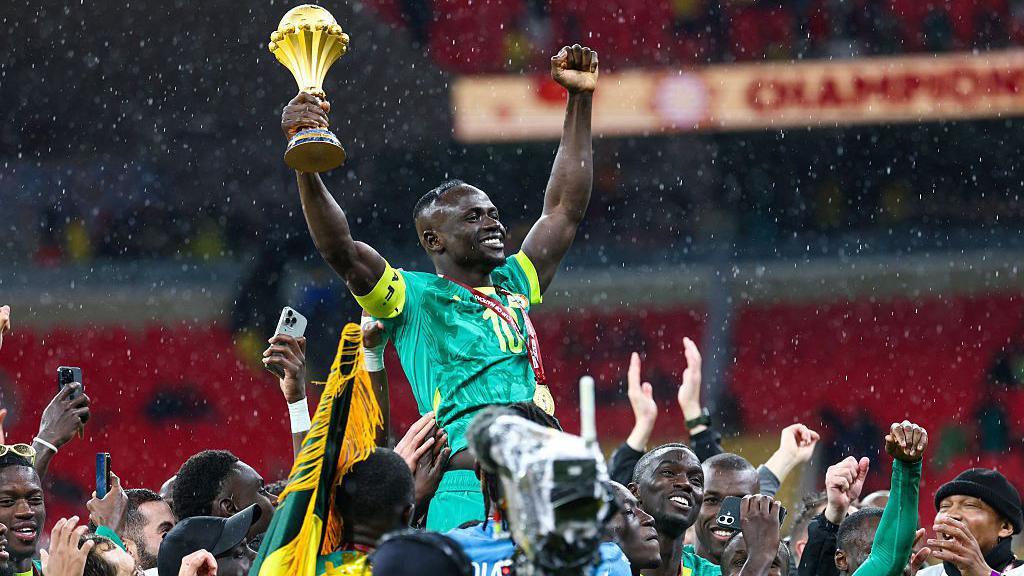
By the time the trophy was lifted in Rabat and the confetti settled on the pitch at the Prince Moulay Abdellah Stadium on January 18, most people thought the story was over. Senegal had won. Morocco had lost. The final whistle had blown, and African football had a new champion. What followed over the next 58 days was something the continent had never witnessed before: a boardroom quietly dismantling a result that millions had already accepted as history. On March 17, 2026, CAF’s Appeal Board stripped Senegal of the Africa Cup of Nations title and handed Morocco a 3-0 administrative victory, erasing a 1-0 extra time win that Pape Gueye had scored with his feet, not a pen.
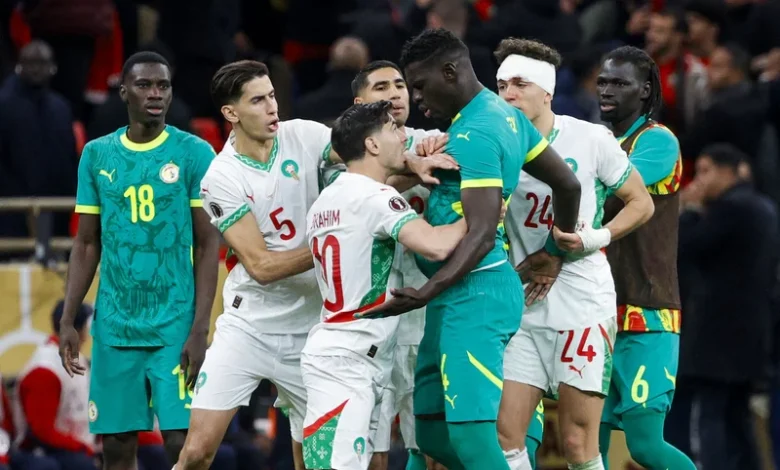
Most coverage of this story has focused on the walkoff. That was the headline moment, the image everyone saw. But the walkoff was only the beginning. There were four reasons this ruling happened, and the further down that list you go, the more uncomfortable the story becomes.
The first reason is the most straightforward, and it is the one CAF put front and center in its official statement. Article 82 of CAF’s regulations states in plain language that if a team refuses to play, or leaves the ground before the regular end of a match without the authorisation of the referee, it shall be considered the loser and eliminated from the competition. Article 84 then follows with the punishment: a 3-0 default defeat, unless the opponent was already winning by a wider margin. There is almost no wiggle room in the wording. You cannot abandon the field of play without permission during a game. If you do, you forfeit. That is it. That is the rule CAF’s appeals board applied.
What is less discussed is how those rules sat entirely dormant on the night of the final. The referee, Congolese official Jean-Jacques Ndala, did not invoke Article 82 when Senegal’s players disappeared down the tunnel. He could have ruled the match a forfeit on the spot. If players leave the field without his permission, he is supposed to issue yellow cards, and if they do not return within a reasonable amount of time, he has the power to abandon the match and call it for the other team. What counts as a reasonable amount of time is not specified in the laws, but common sense would suggest it is considerably less than the 15 minutes that elapsed that night. He chose not to. He waited. The players came back. He blew his whistle and continued. That decision by the referee is what gave this entire legal battle its oxygen.
The second reason Senegal lost this fight is Morocco’s persistence, and specifically the timing of their second appeal. The day after the final, Morocco filed their complaint with CAF’s disciplinary board, explicitly asking for a Senegal forfeit. Nine days later, CAF handed down its first decision. It suspended players and officials, issued heavy fines exceeding one million dollars, and handed Senegal’s coach Pape Thiaw a five-match ban for bringing the game into disrepute. But it stopped short of changing the result. Most governing bodies would have treated that as the end of the matter. Morocco did not. A week after the disciplinary ruling, on February 3, the Royal Moroccan Football Federation filed formal paperwork with CAF’s appeals board, escalating the case to a higher judicial level within the same organization. That second bite at the apple is what eventually produced the verdict that rewrote history.
The third reason is one that barely made it into the international coverage, and it is arguably the most damaging for Senegal’s legal position. FIFA president Gianni Infantino was in the stadium in Rabat that night. He watched everything unfold in real time. The day after the final, he took to Instagram and described the scenes as unacceptable, condemning the behavior of some Senegalese players and technical staff members and specifically stating that it is unacceptable to leave the field of play in this manner. He added that teams must compete on the pitch and within the laws of the game, because anything less puts the very essence of football at risk, and that he expected CAF’s disciplinary bodies to take appropriate measures. When the president of world football publicly signals what outcome he expects from a disciplinary process, and does so the morning after the incident while the tournament is still technically active, that is not a neutral statement. It is a pressure point. CAF’s appeals board would have been aware of exactly what the most powerful man in global football had already said.
The fourth reason is the one most people do not know about, and it is the one that may ultimately decide what happens at the Court of Arbitration for Sport. It has to do not with what Senegal did, but with what CAF’s own first hearing revealed about itself. The Senegalese Football Federation noted in its official statement that the appeals board, in overturning the first disciplinary ruling, cited a procedural flaw in the initial hearing. In other words, CAF’s disciplinary board did not simply decide that the walkoff did not warrant a forfeit. According to what emerged from the appeals process, there was something procedurally wrong with how the first decision was reached. That detail is significant because it raises a question that cuts through the entire narrative: if the first CAF hearing was procedurally flawed, what does that say about the integrity of the process that produced the original outcome? And if the appeals board used that flaw to reopen the door, then Senegal’s lawyers at CAS will almost certainly argue that the entire two-stage process was compromised from the start.
The referee in this instance allowed the match to resume and concluded it, thereby validating the result under the laws of the game. Furthermore, the Court of Arbitration for Sport has consistently upheld what is known as the field of play doctrine, which limits post-match administrative interference with results unless exceptional circumstances exist. Senegal did leave the pitch during the chaos. That is not in dispute. What is equally not in dispute is that they returned. The match resumed. A penalty was taken. A goal was scored. A winner was declared on the night by the referee whose authority the laws of football say is final. he question CAS will have to answer is whether what happened in the tunnel for those 15 minutes constitutes a completed violation that overrides everything that came after it, or whether the referee’s decision to continue the match settled the matter the moment he blew that whistle.
Some legal interpretations argue that once play resumes and the referee allows completion, the sporting result should stand with disciplinary sanctions applied separately. Others maintain that the act of leaving the field itself is a completed violation, triggering automatic forfeiture under the law. CAF’s decision indicates it leans toward the latter interpretation. CAS may see it differently. In the eyes of CAS arbitrator Raymond Hack, this appeal will end in Senegal’s favor.
The reaction from the Senegalese side has been fierce at every level. Senegal defender Moussa Niakhate posted an image on his private Instagram account of himself holding the trophy with a message that said, come and get it, they are crazy. Left back El Hadji Malick Diouf added on his Instagram story that it is not what I expected and that this thing is not going anywhere. The Senegalese government described the ruling as a manifestly erroneous interpretation of the regulations, leading to a grossly illegal and deeply unjust decision, and said that Senegal unequivocally rejects this unjustified attempt at dispossession The federation’s secretary general was even more direct, telling Senegalese public broadcaster RTS1 that the law is on their side and that they will not back down.
Across Africa, the broader reaction has been one of outrage. Algerian journalist Maher Mezahi described the feeling across the continent and warned that CAF’s history of contentious decisions, many of which have been overturned by CAS, undermines confidence in its disciplinary processes. Morocco, for their part, have been measured. The Royal Moroccan Football Federation said its approach was never intended to challenge the sporting performance of either team but solely to request the application of the competition’s regulations, reaffirming its commitment to clarity and stability within African competitions.
Any CAS appeal by Senegal would typically take about a year to reach a verdict, which means the outcome will almost certainly arrive long after both teams have played at the 2026 FIFA World Cup in the United States, Canada and Mexico. Morocco goes into that tournament as the official African champion. Senegal goes in as a team that believes it never stopped being one.
Between those two truths sits the fourth reason, the procedural crack in CAF’s own process that Senegal’s legal team will now take to Lausanne. It may not be the loudest part of this story. But it could end up being the most important one.