

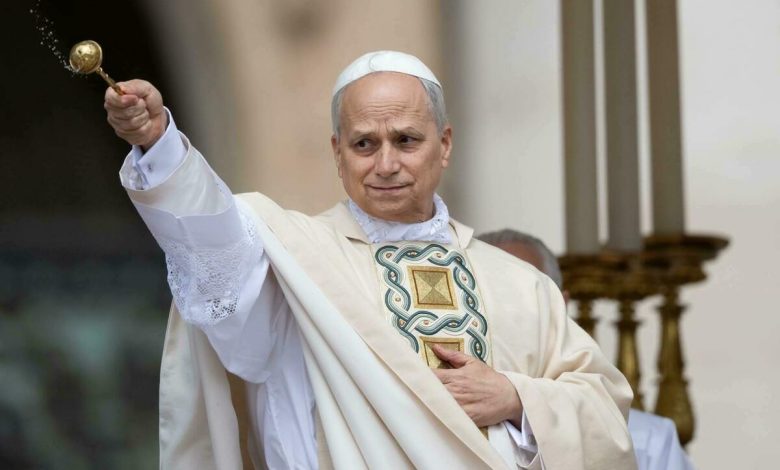
Pope Leo XIV Is Coming to Cameroon and the Stakes Are Hi...
For millions of Cameroonians, the announcement arrived like a sudden clearing after years of storm clouds. Pope Leo XIV, the first American-born pope in the history of the Roman Catholic Church, is scheduled to set foot on Cameroonian soil this April. The visit marks the fourth papal trip to the country in modern history and, by far, the most politically charged one.
The Vatican confirmed on February 25, 2026, that Pope Leo will travel to Cameroon from April 15 to 18. He will visit the capital Yaoundé, the northwestern city of Bamenda, and Douala, the country’s largest city and economic hub. The trip forms part of a sweeping ten-day apostolic journey across four African nations covering Algeria, Cameroon, Angola, and Equatorial Guinea, scheduled from April 13 to 23.
But while the logistics are papal, the context is undeniably political. Cameroon is a country at war with itself, and the pope is walking directly into the heart of it.
Who Is Pope Leo XIV?
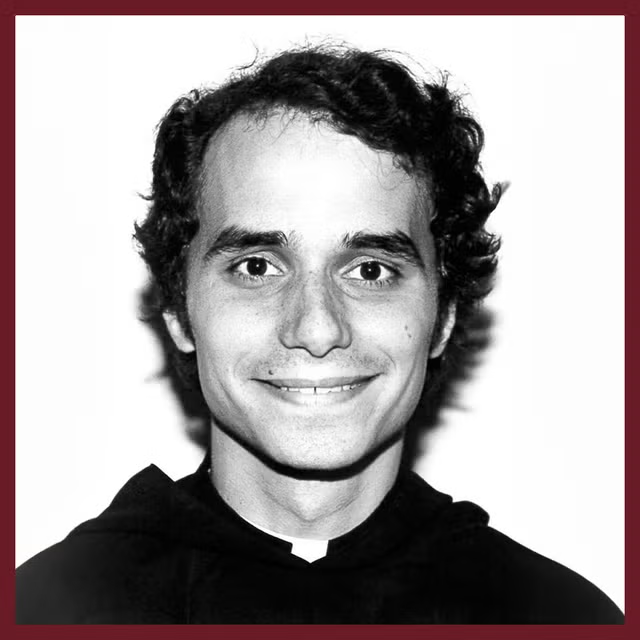
To understand the weight of this visit, it helps to know the man making it. Born Robert Francis Prevost in Chicago, Pope Leo XIV is the first U.S.-born pope ever elected to lead the Catholic Church. He is also the first from the Augustinian religious order. He spent nearly two decades as a missionary in Peru before his elevation to bishop and, ultimately, to the papacy.
He chose the papal name Leo XIV and made peace and care for the poor central themes of his pontificate. His first words from the balcony of St. Peter’s Basilica were simple and deliberate: “Peace be with all of you.”
That opening call for peace will be tested in Cameroon more than almost anywhere else on his itinerary. For Leo XIV, the first Augustinian pope of the modern era, the African journey is both personal and programmatic. It signals clearly where he sees the global Church heading. It also places the continent not at the margins of Catholic life but squarely at its center.
A Visit Steeped in History
Cameroon occupies a quietly distinguished place in the Catholic Church’s African story. It has welcomed popes before, and each visit carried the unmistakable imprint of its era.
Pope John Paul II made his first trip to Cameroon in August 1985. He traveled to Yaoundé, Douala, Garoua, and Bamenda while the country was still recovering from a failed coup attempt the prior year. His message centered on peace, unity, and reconciliation. He returned a decade later, in 1995, and during that trip promulgated Ecclesia in Africa, a landmark apostolic document. It outlined the Church’s mission across the continent, with particular emphasis on justice, peace, and social development.
Benedict XVI and the African Synod
Pope Benedict XVI traveled to Yaoundé in 2009 to launch preparations for the Second African Synod of Bishops. Thousands of worshippers filled stadiums and public squares during that visit, reflecting the country’s deep Catholic roots.
Leo XIV will be the third pope to visit Cameroon, after John Paul II in 1985 and 1995 and Benedict XVI in 2009. John Paul II called for moral responsibility and national unity, while Benedict XVI emphasized reconciliation, justice, and peace from Yaoundé. Each predecessor came bearing similar language. None of them, however, arrived amid anything like what Cameroon is living through today.
The Anglophone Crisis: A War the World Has Largely Ignored
The most sobering dimension of this papal visit is where it will take the pontiff. He is heading directly into the epicenter of one of Africa’s most neglected conflicts.
The crisis began as protests by English-speaking lawyers and teachers over perceived marginalization. It later escalated into armed confrontations between separatist groups and government forces. What started as a professional strike in 2016 transformed, within a year, into open armed insurgency.
How the Conflict Took Root
In October 2017, separatist movements declared the formation of an independent state they called Ambazonia, covering the Northwest and Southwest regions. The government responded with military force, and the country has been locked in a grinding civil war ever since.
The numbers are staggering. The violence has resulted in over 1,800 deaths, the internal displacement of about 500,000 people, and the flight of tens of thousands of refugees, particularly to neighboring Nigeria. Catholic Review Some analysts place the death toll considerably higher. The Anglophone crisis has caused over 6,000 deaths and more than 600,000 displacements, while United Nations planning documents for 2026 emphasize continuing humanitarian pressures.
Decades of Marginalization
The roots of the conflict stretch back further than 2017. When Cameroon reunified in the early 1960s, the English-speaking minority inherited from British-administered Southern Cameroons found themselves absorbed into a Francophone-dominated state. Decades of exclusion in schools, courts, and government eventually exploded into revolt.
Analysts describe the crisis as deadlocked, with no apparent breakthrough in dialogue between the government and separatists. The government initially hoped for outright military victory over the militias, but that success has eluded them. Various pro-independence militias, some operating independently from political leaders in exile, have also lost popular support because of their own actions.
Security concerns had previously cast doubt on whether the Bamenda stop would be feasible. That it is proceeding speaks to the Vatican’s determination and to the complexity of what the Church hopes to accomplish here.
Political Tensions Add Another Layer
Any discussion of this visit cannot ignore Cameroon’s turbulent domestic politics. President Paul Biya has ruled the country since 1982, making him one of the world’s longest-serving leaders. He is also a practicing Catholic. The papal visit comes at his personal invitation, according to a communiqué from Samuel Mvondo Ayolo, director of the Civil Cabinet.
Critics have not let that detail pass quietly. The visit is set against the backdrop of the disputed presidential election of October 2025. Opposition groups reject the official results as fraudulent. Demonstrations followed the announcement of Biya’s proclaimed victory. For some activists, a papal visit risks lending moral credibility to a government they view as deeply illegitimate.
Church leaders are pushing back firmly against that framing. The bishops stress that the pope is not visiting as a political actor but as a pastor. His mission is primarily spiritual. Through liturgical celebrations and meetings with civil and religious leaders, young people, and victims of violence, he will deliver a message centered on dialogue, justice, and forgiveness.
For the local Church, this visit is a moment of pastoral renewal for a people exhausted by conflict and years of unanswered grief.
Why Africa, and Why Now
Pope Leo XIV’s African journey also carries significance within the broader story of global Catholicism. This is his first visit to the continent since his election in May 2025. It signals clearly where he believes the Church’s future lies.
About 20 percent of the world’s Catholics now live in Africa. Vatican reporting highlights the continent as the region with the strongest growth in Catholic population. Cameroon reflects that trend vividly. Christianity is the predominant faith in Cameroon, practiced by more than 60 percent of the population. More than 7.9 million Catholics make up roughly 27.9 percent of the population, according to the Vatican’s latest statistics.
A Young and Growing Church
Demographically, Cameroon is strikingly young. In 2021, more than 40 percent of Cameroonians were under the age of 15. This is a growing, faithful population that will shape the Church’s direction across the coming generations.
The Vatican has highlighted that peace and care for the poor will be central themes of the African journey. That framing resonates strongly in Cameroon, where Catholic institutions run schools, hospitals, and humanitarian programs that serve as critical lifelines for communities the state has long underserved.
For ordinary Cameroonians, particularly those living through the Anglophone conflict, the pope’s arrival carries a weight that is both spiritual and deeply human.
Archbishop Andrew Nkea of Bamenda summed up the sentiment directly: “Cameroon has faced many difficulties, and the Pope comes as a messenger of peace.” He added, “We thank God and the Holy Father, Pope Leo XIV, who has decided that his first visit to Africa will include Cameroon. We are all very, very happy.”
The Expectations Are Real
Beyond the celebrations, many advocates and civic leaders are watching closely for substance. Analysts argue that a credible papal message should push for civilian protection and humanitarian access, encourage a return to dialogue, and urge restraint in a tense political environment.
The symbolism of a pope standing in Bamenda is not lost on anyone. And the fact that this particular pope opened his papacy with a call for peace has raised expectations considerably.
A papal presence in Bamenda carries symbolic weight. It signals solidarity with communities affected by violence and underscores the Vatican’s concern for peace. However, the visit must balance encouragement with diplomatic caution. Explicit political statements could complicate local dynamics, while silence might disappoint those seeking moral clarity.
This is not a routine pastoral trip. It is a visit carrying history, hope, and an enormous amount of unresolved pain. It arrives at a moment when Cameroon desperately needs the world to pay attention.
The emblem the National Episcopal Conference of Cameroon released for the visit carries the theme “Ut omnes unum sint,” meaning “That they may all be one,” drawn from the Gospel of John. Church leaders say the symbol reflects hope, reconciliation, and the call to communion. Whether those words translate into anything tangible for the Northwest and Southwest regions will be watched closely, both in Cameroon and across the African continent.