

After Cameroon&8217s Controversial Exit from the 2025 AFC...
The final whistle in Rabat did more than end Cameroon’s 2025 Africa Cup of Nations journey. It ignited conversations about refereeing integrity, showcased remarkable young talent, and ultimately highlighted why the Indomitable Lions’ future remains extraordinarily bright despite a painful 2-0 quarterfinal loss to hosts Morocco.
For 90 minutes at Stade Prince Moulay Abdellah, Cameroon battled courageously against not just Morocco’s technically gifted squad but also questionable officiating decisions that left players, coaches, and supporters justifiably frustrated. Nevertheless, what emerged from this tournament offers genuine excitement about where Cameroonian football is heading.
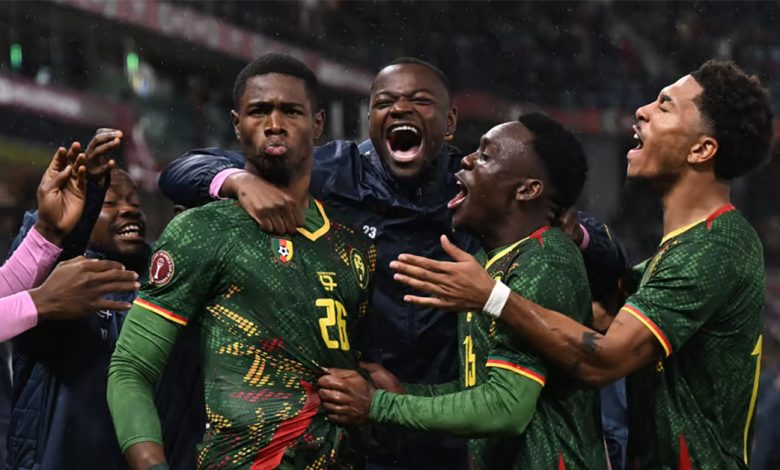
The brilliance of Christian Kofane illuminated Cameroon’s campaign like a beacon of hope. At just 19 years old, this Bayer 04 Leverkusen striker delivered performances that announced his arrival on the continental stage with emphatic authority. Kofane’s winning goal against Mozambique earned him Man of the Match honors while establishing a tournament record. Subsequently, against South Africa in the knockout rounds, he scored again, becoming the second-youngest Cameroonian ever to find the net in an AFCON knockout match, trailing only the legendary Samuel Eto’o.
What distinguishes Kofane isn’t merely his goals but rather his remarkable composure under pressure. Trained at AS Nylon where tiki-taka football shaped his technical foundation, he adapted seamlessly to European football at Albacete and now translates that sophistication to international competition. His movement off the ball, tactical intelligence, and ice-cold finishing demonstrate maturity beyond his years. Furthermore, Kofane’s humility shines through his words after each match. “I try to give a bit of joy to Cameroonians,” he shared. “It’s a childhood dream coming true, and we will keep working to go as far as possible.”
Bryan Mbeumo‘s tournament showcased why Manchester United invested heavily to bring him from Brentford. The 26-year-old forward delivered consistently throughout AFCON 2025, providing the assist for Karl Etta Eyong’s winner against Gabon in Cameroon’s opening match. His pace, technical ability, and willingness to take on defenders repeatedly troubled opposition backlines. Mbeumo’s linkup play created numerous opportunities, while his work rate set standards for teammates. Although he didn’t score, his contributions extended far beyond statistics. Against Morocco, Mbeumo was involved in the tournament’s most controversial moment when he appeared clearly fouled inside the penalty area during the second half. “During the game, I felt like he touched me,” Mbeumo explained afterward. “After the match, they showed me the images again, it’s very blatant.”
Despite the frustration, Mbeumo maintained perspective and class. He acknowledged his team’s first-half struggles while praising the group’s quality and youth. “We have such a good group, such a quality group, young as well, so that’s positive for the future,” he emphasized. His leadership, both through performance and character, establishes him as a cornerstone for Cameroon’s attacking future.
Karl Etta Eyong impressed with energetic performances that announced him as another rising star. The Levante forward’s early goal against Gabon demonstrated clinical finishing, while his tireless running and intelligent positioning throughout the tournament showed he possesses attributes to thrive at the highest level. Eyong’s work rate never wavered, pressing defenders relentlessly and creating space for teammates with intelligent movement.
Carlos Baleba controlled midfield with maturity exceptional for his age. The Brighton midfielder broke up opposition attacks, distributed possession intelligently, and provided defensive solidity that allowed more creative players to flourish. His tactical discipline and reading of the game suggest he’ll anchor Cameroon’s midfield for years to come. After the Morocco defeat, Baleba spoke thoughtfully about the controversial penalty decision while refusing to use it as an excuse. “I think if the referee could have whistled the penalty, the game would have taken a different turn but he didn’t whistle,” he noted. “If VAR couldn’t see, we’re not going to blame something about this because it’s a football match.”
The refereeing controversy surrounding Cameroon’s elimination deserves honest examination. Hours before kickoff, CAF replaced Egyptian referee Amin Omar with Mauritanian official Dahane Beida following complaints from Morocco’s football federation. The sudden change, made without informing Cameroon’s federation, raised immediate questions about fairness and transparency.
During the match itself, Beida’s decisions consistently favored Morocco in crucial moments. The clearest incident occurred when Mbeumo was brought down inside Morocco’s penalty area during the second half. Contact was evident, the challenge came late, and in most contexts, referees award such penalties without hesitation. Yet Beida waved play on, and VAR never intervened despite the incident being “very blatant” according to Mbeumo after reviewing footage.
Another contentious moment came late in the match when Morocco defender Adam Masina appeared to strike Etta Eyong’s head with his elbow inside the penalty area. Once again, neither the referee nor VAR acted. Samuel Eto’o, president of Cameroon’s football federation and watching from the VIP section, reportedly erupted in anger at CAF president Patrice Motsepe following these decisions.
Interestingly, Morocco has faced similar accusations throughout this tournament. Tanzania felt aggrieved after a potential late penalty wasn’t awarded in their round of 16 clash. Mali had penalty appeals rejected, while Morocco received a penalty after extensive VAR review following an initially ignored handball. The pattern suggests either extremely permissive refereeing or potential home advantage influencing decisions.
Morocco coach Walid Regragui angrily rejected suggestions his team benefited from favorable officiating. “Many people want to believe or make others believe that we have advantages from the referees,” he insisted. “We win our matches on the field.” However, the controversy surrounding referee changes, multiple disputed decisions across different matches, and consistent patterns raise legitimate questions that African football authorities must address transparently.
David Pagou deserves tremendous credit for the work he accomplished despite impossible circumstances. Appointed just weeks before the tournament after Marc Brys was controversially dismissed by Samuel Eto’o, Pagou inherited a squad missing key experienced players and given minimal preparation time. That he guided this young team to the quarterfinals represents a significant achievement.
Pagou’s tactical approach emphasized defensive organization while encouraging youthful flair in attack. He trusted young players like Kofane and Eyong with crucial responsibilities, giving them opportunities to shine on Africa’s biggest stage. His calm demeanor and clear communication helped players focus on football rather than off-field drama. After the Morocco defeat, Pagou expressed pride in his team’s efforts. The bond he forged with players in such limited time speaks to his man-management abilities and suggests he could build something special with proper support.
Marc Brys’ removal remains one of the most contentious decisions in recent African football history. The Belgian coach led Cameroon through an unbeaten AFCON 2025 qualification campaign, finishing atop their group with 14 points. He became the first Cameroon coach since Hugo Broos to complete qualifying undefeated. His tactical acumen, meticulous preparation, and emphasis on team cohesion seemed precisely what Cameroon needed.
However, Brys’ appointment by Cameroon’s Ministry of Sports created immediate conflict with FECAFOOT president Samuel Eto’o, who wanted his own choice in charge. The tension escalated throughout 2024, culminating in Eto’o dismissing Brys in December, just weeks before AFCON began. Brys maintains he never received official dismissal notification and his contract remains valid. He has since filed legal action against FECAFOOT, describing the situation as “amateur” and “illegal.”
The squad controversies amplified pre-tournament chaos. André Onana, Manchester United’s world-class goalkeeper, was excluded despite being in excellent form. Vincent Aboubakar, AFCON 2022’s top scorer with proven big-game experience, didn’t travel to Morocco. Eric Maxim Choupo-Moting, another veteran with invaluable tournament knowledge, also missed out. Various explanations circulated, from disciplinary issues to personality conflicts, yet none provided satisfactory justification for weakening the squad so dramatically.
Two different squad lists circulated publicly. Brys released one selection while Pagou unveiled another after his late appointment. Coaches claiming competing authority, conflicting player call-ups, and very public disputes played out across social media, creating confusion and embarrassment. For players attempting to prepare for a major tournament, this administrative chaos proved deeply unsettling.
This dysfunction reflects broader governance problems within Cameroonian football. Competing interests, personal rivalries, and unclear authority lines have created instability when consistency is essential. Eto’o’s controversial FECAFOOT presidency, marked by FIFA bans from attending national team matches and accusations of electoral interference, continues generating headlines for wrong reasons.
Cameroon’s AFCON 2025 journey unfolded against complex political and social circumstances. Linguistic divisions between francophone and anglophone regions persist, creating national tensions. The anglophone crisis, involving armed conflict and displacement in English-speaking areas, has deepened divisions. Economic challenges and governance questions have tested public confidence across institutions.
Football represents one of few spaces where Cameroonians unite regardless of regional or political differences. When the Indomitable Lions succeed, the entire nation celebrates together. This makes the team’s struggles particularly painful because they feel like another institution failing to realize its potential. However, focusing excessively on politics risks overshadowing the genuine football progress demonstrated at this tournament.
Looking forward, Cameroon possesses extraordinary reasons for optimism. This squad was among AFCON 2025’s youngest, yet competed fearlessly against Africa’s best teams. The talent pool is exceptional. Beyond Kofane, Mbeumo, Eyong, and Baleba, numerous other prospects showed they belong at this level. These players compete for top European clubs, understand modern tactics, and possess physical and technical attributes to match anyone continentally.
What’s needed now is stability, clear strategic planning, and an environment allowing talent to flourish without distraction. Governance reform must become priority. Administrative clarity, transparent selection processes, respectful relationships between federation officials and technical staff aren’t luxuries but necessities for serious ambitions.
Long-term vision matters profoundly. Building successful national team programs requires investment in youth development, coaching education, and infrastructure supporting excellence at every level. Senegal offers an instructive example. They built patiently over years, developing clear playing identity and maintaining coaching stability that delivered their first AFCON title in 2021. Morocco’s current success stems from strategic planning, domestic league investment, and consistent technical staff support.
Cameroon once stood among African football’s elite. The Indomitable Lions reached the World Cup quarterfinals in 1990, won multiple AFCON titles, and produced continental legends. That legacy matters but cannot be the only foundation. Modern success requires matching historical pride with contemporary professionalism.
The players demonstrated they’re ready. Kofane, Mbeumo, Eyong, Baleba, and their teammates showed character, quality, and potential that excites. What they need is leadership matching their commitment, systems supporting their development, and governance worthy of their talent.
Cameroonian fans haven’t abandoned hope despite disappointment. Social media discussions following Morocco’s victory showed frustration certainly, but also genuine excitement about young talent on display. That enduring belief represents one of Cameroon’s greatest assets. The passionate supporters, deep cultural connection to football, and pride in national colors cannot be manufactured. They already exist, waiting for leadership that honors that devotion.
For a nation that once roared on the global stage, where Roger Milla’s corner flag celebrations became iconic and Samuel Eto’o rewrote scoring records, the pathway back to excellence remains open. The talent exists. The passion burns bright. The history inspires. Now, Cameroon must find leadership, stability, and unified purpose to bring everything together.
This AFCON 2025 campaign, controversial as its ending proved, planted seeds for something special. If Cameroon’s football authorities choose wisdom over ego, professionalism over politics, and collective good over individual interests, the Indomitable Lions will roar again. The future isn’t just promising. It’s extraordinary. The question is whether those in power will allow it to flourish.